
How to Make Your Own Wellbeing Kit

A Little Kit for the Hard Days
Build Your Own Mental Health Kit

When you’re stressed, overwhelmed, or simply having a hard day, the strategies that usually help can be surprisingly difficult to remember. You may know what you need, but finding the right idea can feel like one more decision when your energy is already low.
A Mental Health Kit keeps your coping strategies, self-care reminders, and comforting tools together in one easy-to-reach place. This guide will help you build a kit that feels personal, practical, and useful to you. There is no perfect way to make one, so take what helps, leave what does not, and start as small as you need.

What is a Mental Health Kit?
A Mental Health Kit is one place where you can keep the strategies, reminders, and comforting objects that help you through difficult moments.
It could be a box beside your bed, a pencil case in your bag, a folder on your desk, or even a note saved on your phone.
Your kit might contain breathing exercises, coping cards, contact details for people you trust, self-care reminders, or objects that help you feel grounded.
There is no set list of what belongs inside. The most useful kit is one that reflects what genuinely helps you.


Why Make One?
Difficult moments often leave little energy for deciding what might help. By preparing your strategies and support tools ahead of time, you give yourself a clear place to begin when everything feels like a little too much.
The idea draws on distress-tolerance and self-soothing skills used in Dialectical Behaviour Therapy; these skills are designed to help people manage difficult moments without adding to their distress. You do not need to be in therapy or experiencing a crisis to benefit from them. A Mental Health Kit can simply be another practical way to care for your everyday wellbeing.

Make it Yours
There is no ‘one-size-fits-all’ Mental Health Kit. A strategy that helps someone else may not feel right for you, and that is completely okay. One person might find music calming, while another may prefer silence, movement, or talking to someone they trust.
Choosing your own tools makes the kit more personal and practical. Having a sense of choice can support motivation and make people more willing to engage with an activity.2
Try different ideas, keep what helps, and leave out what doesn't feel useful.
Your kit can also change with you. Something that supports you now may be different from what you need in a few months, so you can update it whenever you like.
Let’s Build Your Kit

Step 1: Find a home for your kit
Start by choosing something to hold your tools and reminders. This could be:
A shoebox beside your bed
A pencil case in your bag
A small container on your desk
A folder containing printed activities
A note/folder on your phone
A combination of physical and digital tools.
Choose something that suits your daily life and is easy to find. You can decorate it, write your name on it, or choose colours that feel comforting.
Personalising the container can help it feel intentional and clearly yours.
Try to keep it somewhere accessible. A simple kit that you can reach easily will be more useful than an elaborate one hidden at the back of a cupboard.

Step 2: Create your personal guide
Think about the small changes you notice when things are becoming harder.
These are your early warning signs.
They might include:
Skipping meals
Sleeping more or less than usual
Avoiding messages
Feeling unusually irritable
Losing interest in things you normally enjoy
Struggling to concentrate
Putting off simple tasks
Feeling physically tense
Thinking about the same problem repeatedly
Write your signs on a card and place it inside your kit.
The aim is not to criticise or diagnose yourself. It is simply to recognise when you may need some extra care. Noticing these signs early can remind you to use your kit before you reach your limit.

Step 3: Your Support People
Write down the people and services you can contact. You might include someone who will listen, someone who can offer practical help, and any professional support you use.
It may also help to prepare a message you can copy and send:
“I am having a difficult day. Do you have ten minutes to talk?”
“I do not need advice right now, but I would appreciate some company”


Step Four: Your Grounding Strategies
Grounding strategies bring your attention back to your breathing, body, or immediate surroundings. This may help you feel steady enough to decide what to do next.
Choose two or three strategies, such as:
Box breathing
The five senses check-in
Slow breathing is linked with relaxation and emotional regulation.3


Step 5: Your Coping and Self–Care Ideas
Include realistic options such as eating something, taking a shower, going outside, listening to music, or breaking a task into a smaller step.
Another great idea is to include an emotion wheel to help you name what you are feeling. This can help reduce emotional reactivity. 4

Step 6: Add your support tools
Choose a few objects that feel calming or comforting, such as:
A fidget toy, smooth stone, or soft fabric
A photograph, kind message, or meaningful object
Headphones or a calming playlist
A card with a breathing or grounding exercise.
Self-soothing skills used in DBT encourage people to use their senses during difficult moments.5. Choose only what feels safe and comfortable to you.


Step 7: Plan when to use it
Connect one of your wobbly signs with a simple action:
“If I notice I am avoiding messages and skipping meals, I will open my kit and choose one grounding activity”.
These “if-then” plans can make it easier to follow through with an intended action.6.
Practice your strategies on an ordinary day and update the kit whenever your needs change.

Quick Checklist:
A home for you rkit
Your warning signs
Support contacts
Grounding exercises
Coping and self-care ideas
Comforting objects and support tools
A plan for when to use it.
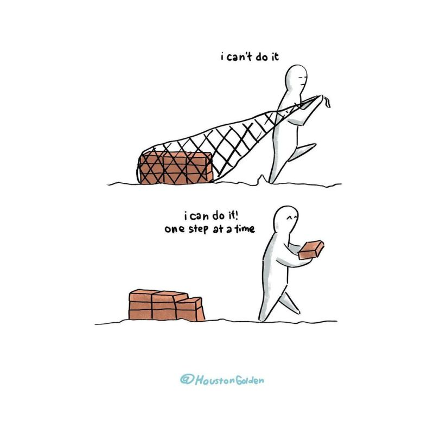
Start small. One helpful strategy, one comforting object, and one person you can contact is enough.
A small place to begin:
A mental health kit cannot remove every difficult feeling or replace professional support. What it can do is make your next helpful step easier to find.
Your kit does not need to be perfect. Start with one strategy that helps you feel grounded, one comforting object, and the name of someone you can contact. You can add to it as you learn more about what supports you.
You could also build a kit with someone you care about or share this guide to help them create their own.

Want to build a kit with a little more guidance? Explore the bluefriend deck for practical wellbeing tools, or enquire about a bluefriend workshop where participants are guided through how to create their own kit with psychological education and materials provided.
Explore the bluefriend deck: https://www.bluefriend.com.au/product-page/self-care-cards-set
Enquire about a workshop: https://www.bluefriend.com.au/workshops
Written by Ramlah Quasier (BPsych BBus)
Edited by Ben Jepsen (Organisational Psychologist MAPS FCOP)
References
1. Linehan, M. M. (2015). DBT skills training manual (2nd ed.). Guilford Press.
2. Deci, E. L., & Ryan, R. M. (2000). The “what” and “why” of goal pursuits: Human needs and the self-determination of behavior. Psychological Inquiry, 11(4), 227–268. https://doi.org/10.1207/S15327965PLI1104_01
3. Zaccaro, A., Piarulli, A., Laurino, M., Garbella, E., Menicucci, D., Neri, B., & Gemignani, A. (2018). How breath-control can change your life: A systematic review on psycho-physiological correlates of slow breathing. Frontiers in Human Neuroscience, 12, Article 353. https://doi.org/10.3389/fnhum.2018.00353
4. Lieberman, M. D., Eisenberger, N. I., Crockett, M. J., Tom, S. M., Pfeifer, J. H., & Way, B. M. (2007). Putting feelings into words: Affect labeling disrupts amygdala activity in response to affective stimuli. Psychological Science, 18(5), 421–428. https://doi.org/10.1111/j.1467-9280.2007.01916.x
5. Gollwitzer, P. M. (1999). Implementation intentions: Strong effects of simple plans. American Psychologist, 54(7), 493–503. https://doi.org/10.1037/0003-066X.54.7.493
Comments